Your Car Breaks Down Friday Night — Payday Loan or Credit Card?
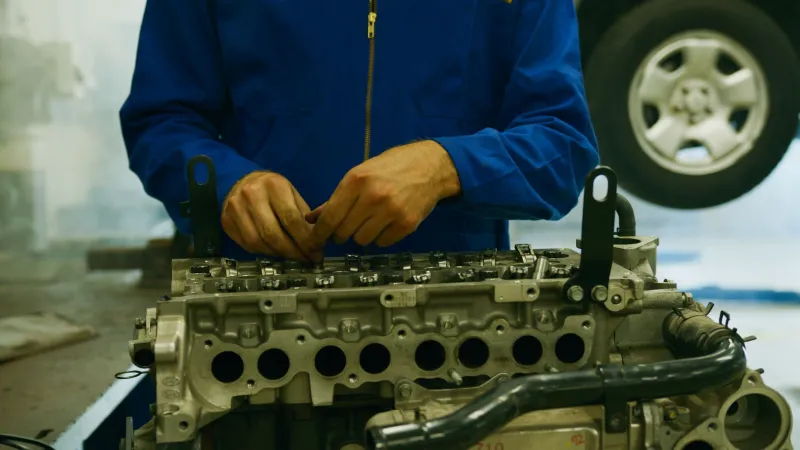
It's 6:45 PM on a Friday. You're in the parking lot of your workplace, and your car won't start. The mechanic down the street says it's the alternator — $480, labor included, and they can get to it first thing Saturday morning. You've got $63 in checking and a credit card sitting at 87% of its limit.
So what do you do?
This is the kind of moment millions of working Americans face every year, and the decision you make in the next few hours can either solve the problem cleanly or drag it out for months. Let's talk through both options honestly.
The Credit Card Option: Not as Simple as It Sounds
Credit cards feel like the obvious answer. You've got one, it's in your wallet, and if you have enough available credit, you can hand it over and be done with it. Simple, right?
Not always.
First, there's the available credit question. If your card is near its limit — which, according to the Federal Reserve, is the reality for a significant chunk of American cardholders — you may not even have $480 to work with. And if you're already carrying a balance, putting another few hundred dollars on top of it starts a slow bleed.
Here's where the math gets interesting. Say you charge $480 to a card with a 24% APR (pretty standard these days, actually on the lower end for many cards). If you pay it off in 30 days, you pay almost nothing in interest — maybe a couple of bucks. But if you're already stretched thin and can only make minimum payments? That $480 repair could cost you $600 or more over time, and it'll sit on your credit utilization ratio the whole time, potentially dinging your credit score.
There's also the approval issue. If your credit isn't great, you may not have a card at all — or your limit may be too low to cover the repair.
The Payday Loan Option: Fast, Focused, and Finite
A payday loan is a short-term cash advance, typically due on your next payday, usually within two to four weeks. You borrow a set amount, pay a flat fee, and it's done. No lingering balance, no revolving debt, no interest compounding quietly in the background.
For the $480 alternator repair, here's what that might look like: you borrow $480, pay a fee (which varies by state but let's say $75 for illustration), and repay $555 on your next payday. The total cost of solving your problem: $75.
Is $75 cheap? No. But compare it to the cascading costs of not fixing your car.
What Happens If You Don't Fix the Car
This is the part people don't talk about enough. The real comparison isn't just payday loan versus credit card — it's payday loan versus doing nothing.
Let's follow the story of Marcus, a warehouse supervisor in Columbus, Ohio. His car needs a $400 repair. He doesn't have the cash and doesn't want to take on debt, so he decides to wait it out. Here's what happens next:
- Week 1: He gets rides from a coworker, but that arrangement falls through by Wednesday. He calls in sick twice rather than admit he has no transportation.
- Week 2: His manager flags his attendance. Marcus's job has a three-strike policy.
- Week 3: The original $400 repair has worsened because he drove on it a few more times. The mechanic now quotes $900.
- Week 4: Marcus misses a full week of work and gets written up.
A $400 payday loan and a $60 fee would have kept Marcus's job, his attendance record, and his car intact. The "cost" of borrowing looks very different when you stack it against the cost of not borrowing.
When a Payday Loan Makes More Sense Than a Credit Card
Here are the specific situations where a short-term payday loan tends to win:
You need cash, not credit. Some mechanics, especially smaller independent shops, prefer cash or will offer a small discount for it. A payday loan gives you actual funds in your account, fast.
Your credit card is maxed or near its limit. You can't put $480 on a card with $200 of available credit. End of story.
You know exactly when you're getting paid. Payday loans are built for people with steady income who just have a timing gap. If your paycheck hits in 10 days and the repair is $400, a payday loan bridges that gap cleanly.
You want to keep credit utilization low. If you're working on your credit score, adding a large charge to your card can hurt your utilization ratio. A payday loan doesn't touch your revolving credit.
When a Credit Card Makes More Sense
Fairness matters here, so let's be real about when the card wins:
You can pay it off in full next month. If the money is genuinely coming and you have the discipline to clear the balance, a credit card with a grace period is effectively free money for 30 days.
Your card has a 0% intro APR. Some cards offer promotional periods with no interest. If you're in one of those windows, use it.
The repair is large and you need more time to repay. Payday loans are designed for short-term needs. A $2,000 transmission rebuild is a different conversation — a personal installment loan or a credit card with a payment plan might be more appropriate.
The Bottom Line for Working Americans
There's no universal right answer, but there is a right answer for your situation. The key is to look at the full picture: how much do you need, when can you pay it back, and what does inaction actually cost you?
For a lot of everyday Americans dealing with a sudden car repair between paychecks, a payday loan is a focused, fast, and knowable solution. You pay a set fee, you solve the problem, and you move on. No revolving balance, no creeping interest, no surprise bill three months later.
At Online Payday Loans, we believe in giving you the information you need to make that call with confidence. Whether it's your car, your heat, or your rent — fast cash solutions exist because life doesn't wait for payday.
And neither should you.